The Squad by Yoni Bashan
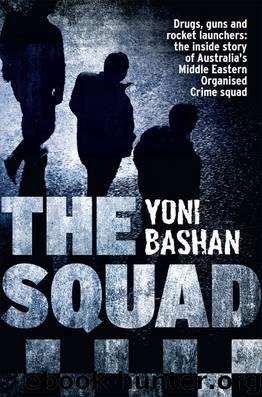
Author:Yoni Bashan
Language: eng
Format: epub
Publisher: HarperCollins Publishers
Published: 2016-07-04T04:00:00+00:00
CHAPTER EIGHT
MEOCS TAG: THE INFORMANTS
Confidential informants were the lifeblood of MEOCS TAG, the cogs that kept the engines turning. Almost every TAG investigation could trace its way back to a tip-off from a source. The vast majority of these informants were criminals and came in two distinct classes: ‘street assets’ and ‘rollovers’.
Street assets worked in the field and got paid for their intelligence, receiving modest cash bonuses ranging from $20 to $50 depending on the quality of their information. This money was signed off and paid out from the carefully managed MEOCS ‘sustenance fund’, a pool of cash that could be dipped into quickly and approved for use by the TAG’s commander. But many rewards payments, particularly the larger kind, were slow to be released. Their approval was left to a committee panel – the Reward Evaluation Advisory Committee – that only met once a month, so if a member of this panel was sick, or if a decision wasn’t reached, it would take at least another four weeks for the matter to be addressed. Sometimes these rewards would be left in limbo for half a year, or even longer, creating tensions between sources and their handlers. For some TAG officers, these delays prompted threats and killed off relationships and trust.
Rollovers were the other class of informant. Many were in prison and turned grass for several reasons, mostly to get bail or a reduction on their sentence. Remand centres became cultivation yards, a place where officers could quietly make an offer. Unlike a street asset’s, a rollover’s information tended to be one-off, or specific to their case.
Within a few months of its formation, MEOCS TAG had amassed more informants, or ‘gigs’ as they’re known in cop speak, than any other command across the entire NSW Police Force. The figures are rough, but the widely quoted statistic is that MEOCS TAG controlled fifty-six per cent of all registered informants used across the NSW State Crime Command – that’s twenty-two officers controlling about half the sources used by 900 detectives across ten crime squads.
Most informants were highly unreliable, dangerous and difficult to manage. Too conspicuous to take to a coffee shop, they usually met with detectives in secluded parks, and were given a pat-down on arrival. This was standard. When picking up a source, officers sometimes arrived with their guns out, or on their lap in the car, for the added protection – you never knew if the whole meeting was a setup. Some informants were so spaced out on drugs that the meetings were cancelled. Occasionally they made outlandish requests – one guy asked for a large upfront cash payment to get his teeth fixed, a request that was flatly denied.
Turning informant quickly became a hallmark of Middle Eastern organised crime, a distinguishing feature right up there with hot-headedness and extreme violence. As a general rule, no one was considered ‘unrollable’, not even the staunchest MEOC figures. There were no limits to this treachery. Family members turned on each other to save themselves.
Download
This site does not store any files on its server. We only index and link to content provided by other sites. Please contact the content providers to delete copyright contents if any and email us, we'll remove relevant links or contents immediately.
Mindhunter: Inside the FBI's Elite Serial Crime Unit by John E. Douglas & Mark Olshaker(9350)
Wiseguy by Nicholas Pileggi(5795)
Room 212 by Kate Stewart(5130)
Hitman by Howie Carr(5101)
Secrecy World by Jake Bernstein(4756)
Killers of the Flower Moon: The Osage Murders and the Birth of the FBI by David Grann(4451)
Papillon (English) by Henri Charrière(4278)
Breaking Free by Rachel Jeffs(4222)
Killers of the Flower Moon by David Grann(4062)
Say Nothing by Patrick Radden Keefe(3992)
American Kingpin by Nick Bilton(3894)
The Secret Barrister by The Secret Barrister(3715)
Molly's Game: From Hollywood's Elite to Wall Street's Billionaire Boys Club, My High-Stakes Adventure in the World of Underground Poker by Molly Bloom(3541)
Mysteries by Colin Wilson(3460)
In Cold Blood by Truman Capote(3390)
Signature in the Cell: DNA and the Evidence for Intelligent Design by Stephen C. Meyer(3141)
I'll Be Gone in the Dark by Michelle McNamara(3086)
Rogue Trader by Leeson Nick(3048)
Bunk by Kevin Young(3005)
